


The Anatomy of Time
Behind the stoic stone facades lies a world of precision engineering. A clock tower is not merely a monument; it is a living machine. Unlike modern quartz clocks driven by batteries, these giants are powered by the relentless pull of gravity and regulated by the rhythmic swing of the pendulum. Here, we dissect the mechanism that turns the chaos of the universe into the order of the second.
The Flow of Energy
The life of a mechanical clock begins at the top of the tower and ends on the dial. It is a transfer of energy through three critical stages: Power, Regulation, and Display.
The Engine: Gravity & Weights
Potential EnergyThe heart of the tower is powered by gravity. Massive iron weights (often weighing hundreds of kilograms) are wound up to the top of the tower on steel cables. As gravity pulls them down slowly, they generate the immense torque needed to drive the heavy iron gears. It is the same principle as a falling apple, harnessed to measure time.
The Brain: The Escapement
RegulationIf the weights fell unchecked, the gears would spin out of control. The Escapement mechanism acts as a brake. It releases the raw energy in precise, equal intervals—usually one "tick" per second. This impulse pushes the pendulum, keeping the rhythm steady regardless of temperature or wind.
The Face: Motion Works
DistributionFinally, the energy reaches the "Motion Works." This set of gears reduces the speed so that for every one full rotation of the minute hand, the hour hand moves exactly 1/12th of a circle. Long rods transmit this motion to the four dials on the tower's exterior, showing the time to the city below.
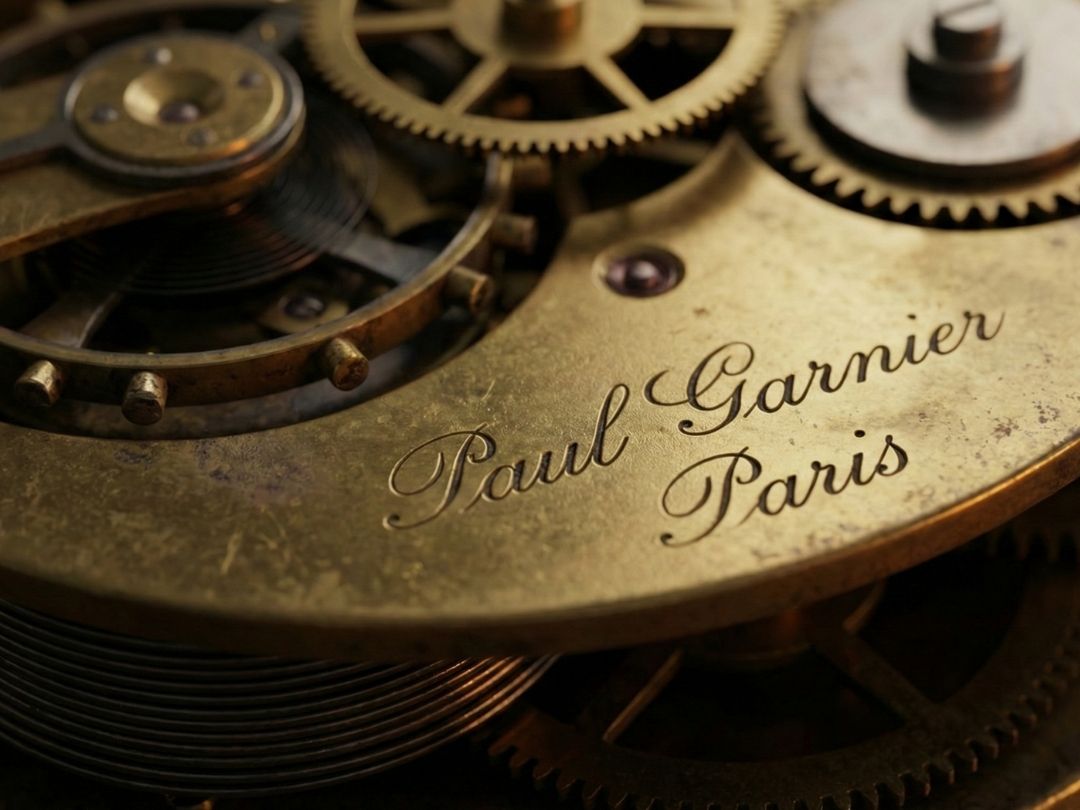
Many Ottoman clock towers, including Dolmabahçe and Izmir, feature mechanisms by the famous French horologist Paul Garnier. These mechanisms were prized for their reliability in variable climates.

The Muvakkithane: The Ancestor of the Tower
Before the monumental stone towers rose in the squares, time was measured in modest rooms within mosque courtyards. These were the Muvakkithanes (Timekeeping Houses). Here, astronomers used astrolabes and quadrants to calculate prayer times based on the sun’s position. The Clock Tower was not a replacement, but a monumental evolution of this sacred science.
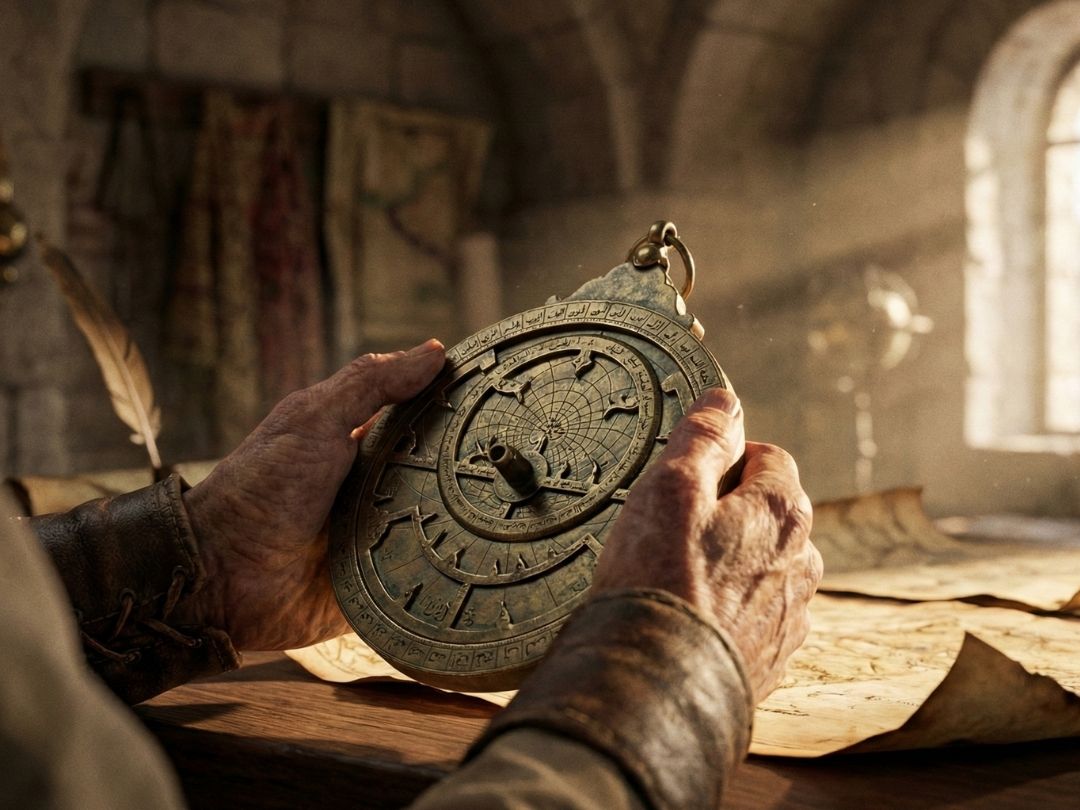
The Muvakkit: The Keeper of Time
The Muvakkit was more than a clock-watcher; he was an astronomer and a mathematician. Using instruments like the quadrant (rubu tahtası), he calculated the exact moment of noon (zawal) and sunset. When mechanical clocks arrived, these scholars became the first to maintain them, bridging the gap between celestial observation and mechanical precision.
As the Ottoman Empire modernized in the 19th century, the private science of the Muvakkithane became the public service of the Clock Tower. The sound of the bell began to complement the voice of the Muezzin, synchronizing the city's secular and spiritual life.
Enrich Your Exploration

Four Seasons:
Bosphorus, Perfected


Garenta: Discover More of Istanbul
the landmarks; experience the
real city. Garenta offers the freedom to discover Istanbul's hidden treasures at your own pace.

Stories from the Stone Sentinels
A clock tower does not die from age; it dies from silence. Maintaining these century-old giants requires more than engineering—it requires an surgeon’s touch. For generations, master watchmakers (like the legendary Meyer family in Turkey) have climbed the narrow stairs to oil the escapements, file the gears, and keep the empire’s time ticking.
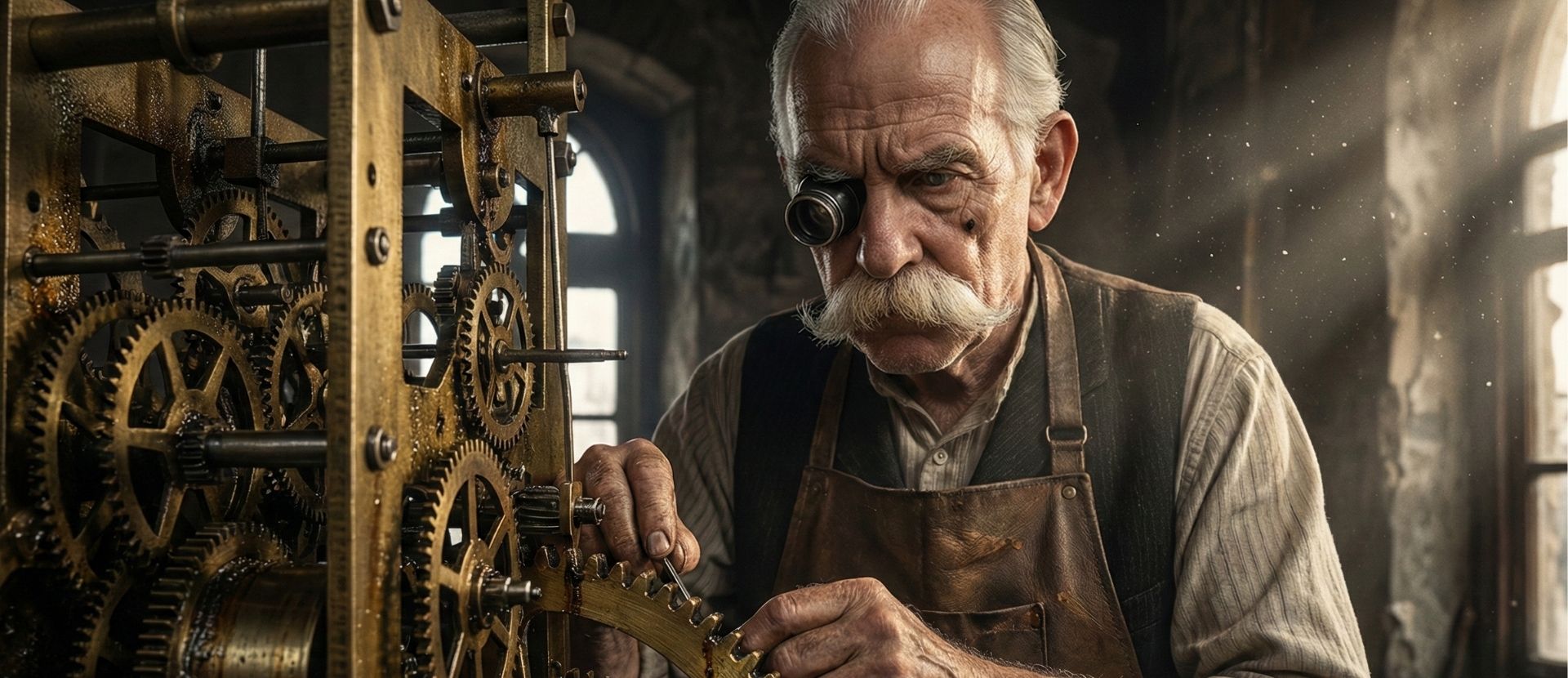 Masterclass
Johann Meyer’s Legacy
Since 1878, the Meyer family has been the official timekeeper of the Palaces. Discover the story of the hands that wind Dolmabahçe and the delicate process of reversing entropy in iron and brass.
The Tools of the Trade
Look closely at the dial. You will notice the number four is written as "IIII" instead of "IV". This is the "Watchmaker's Four," chosen for symmetry to perfectly balance the heavy "VIII" on the opposite side of the dial.
Journey with Confidence
Acıbadem Hospitals Group: Global Excellence in Healthcare
While you immerse yourself in the rich history of Istanbul, your well-being is protected by a future-focused healthcare leader. Acıbadem provides world-class medical services, from comprehensive health screenings to advanced treatments, all delivered with a commitment to your safety and comfort.
Travel with the assurance that you and your loved ones are in the most capable hands.

The Makers' Mark
Sultan Abdulhamid II demanded perfection. For his imperial project, he turned to the master horologist of Paris: Paul Garnier. His signature, engraved in brass on the mechanisms of Dolmabahçe and İzmir, was a guarantee of precision that would outlast the Empire itself.

Discover more with FAQ
How often does a historical clock tower need to be wound?
Most monumental clocks were designed with an “8-day movement.” This means the heavy iron weights have enough potential energy to run the clock for just over a week. Historically, the Muvakkit (Timekeeper) would climb the tower once a week to crank the weights back up to the top. Today, many have been fitted with electric auto-winding motors to perform this task.
Why do mechanical clocks run faster or slower in different seasons?
It is a matter of physics called “Thermal Expansion.” The metal rod of the pendulum expands in summer heat (becoming longer and swinging slower) and contracts in winter cold (becoming shorter and swinging faster). Master watchmakers must make micro-adjustments to the pendulum throughout the year to compensate for the weather.
What prevents the heavy weights from crashing through the floor if a cable snaps?
Safety was a key architectural consideration. The bottom of the weight shaft in a clock tower is typically filled with a deep box of sand or sawdust. In the catastrophic event of a steel cable snapping, the massive weight would plunge into this soft buffer, preventing it from destroying the tower’s foundation.
Does the clock mechanism also ring the bell?
Technically, they are two separate machines housed in the same frame. This is called a “Two-Train Movement.” The “Going Train” moves the hands, while the “Strike Train” rings the bell. They are independent but synchronized; if the Strike Train breaks, the clock can still tell the correct time visually without making a sound.
Can these antique mechanisms be repaired with modern parts?
No. A 19th-century Paul Garnier or Eijsbouts mechanism requires parts made of the specific alloy and cut to the specific geometry of that era. When a gear tooth breaks, a restorer cannot buy a spare; they must hand-cast and hand-file a new piece from raw metal to match the original microscopic specifications.
